
Bengaluru
Bengaluru
Search Here
AUTHOR: Bewise-Admin

A few years ago, academic success in India had one measure: marks.
Study the chapter. Memorize the answer. Write the exam. Repeat.
But something has been shifting quietly inside CBSE classrooms since 2020. Students are working across subjects they weren't allowed to mix before. Assessments now include case studies alongside theory questions. Coding has moved from an elective to a core skill.
This isn't accidental. It is the result of the National Education Policy 2020, and CBSE has been one of the first boards to translate it from policy into practice.
Here is what that actually looks like.
For decades, India's education system was criticized for producing students who knew the right answers but struggled to apply them. Rote learning dominated classrooms. Rigid stream structures meant a student interested in both biology and economics had to choose one and abandon the other.
NEP 2020 was designed to address this directly. The policy document, released by the Ministry of Education, calls for a shift toward experiential learning, critical thinking, and holistic development. The goal is not to change what students know, but how they learn and what they can do with that knowledge.

CBSE has been implementing these changes at scale by rewriting curriculum frameworks, redesigning assessments, and introducing entirely new subject areas.
CBSE introduced Artificial Intelligence as an elective subject for Classes 8 to 10 and has since integrated computational thinking into mainstream teaching from middle school onwards. The AI curriculum covers data literacy, machine learning concepts, and ethical considerations, not just coding syntax.
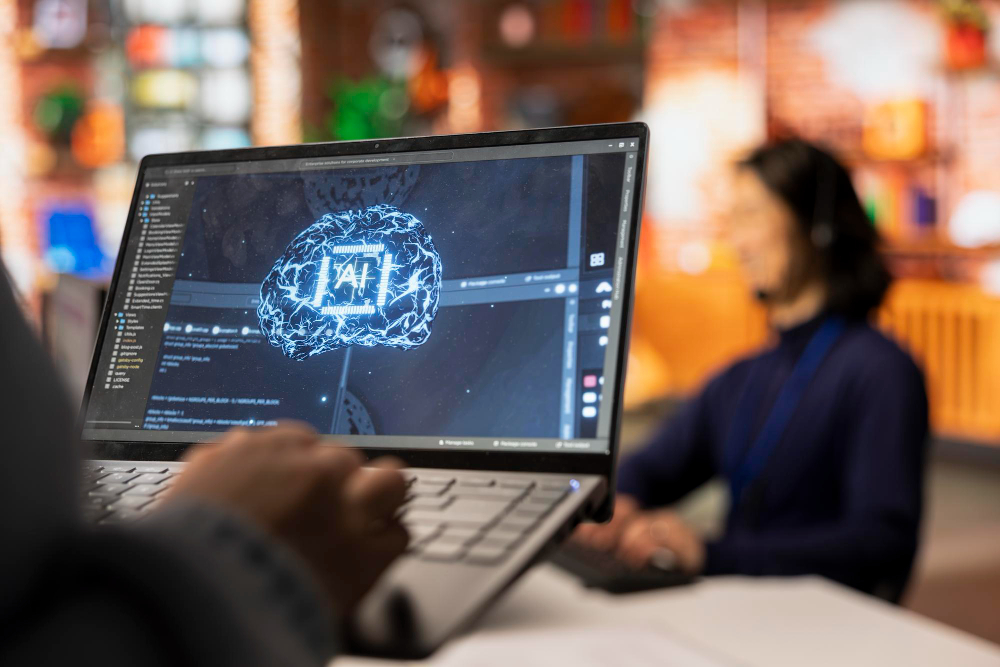
The reasoning behind this is practical. Computational thinking, the ability to break down a problem, identify patterns, and design step-by-step solutions, is a transferable skill. It is relevant to medicine, finance, design, and policy, not just technology careers.
For students, this means learning to think differently about problems, not just learning a new tool.
NCERT, which develops curriculum materials for CBSE, has been revising textbooks to reduce factual overload and increase conceptual depth. New editions include real-life scenarios, data-based questions, and case studies alongside traditional theory.

In practice, this means a Class 10 science student might analyze an environmental case study rather than just define terms. A Class 12 economics student might interpret a data set on employment rather than reproduce a model from memory.
This is a deliberate design choice. The revised National Curriculum Framework for School Education (NCF-SE 2023) states explicitly that learning must connect to the student's lived experience, not exist in isolation from it.
One of the most significant structural changes under NEP is the dismantling of the rigid Science/Commerce/Arts divide.
Previously, choosing a stream at Class 11 was effectively a career commitment. A student in the Arts stream could not access mathematics. A Commerce student had no access to biology.

Under the new framework, CBSE students can combine subjects across traditional stream boundaries. A student can now study Economics alongside Physics, or Psychology alongside Computer Science. The intent is to reflect on how the real world actually works where career paths are rarely confined to a single discipline.
This change is still being rolled out progressively, and not all schools have the faculty capacity to offer every combination. But the policy direction is clear, and CBSE has begun building the assessment and administrative infrastructure to support it.
For years, financial literacy, communication skills, and entrepreneurial thinking were largely absent from formal schooling, which addressed at best through occasional workshops or co-curricular activities.
NEP 2020 identifies life skills as a core educational outcome, not an optional supplement. CBSE has responded by incorporating financial literacy modules into business studies and social science curricula, introducing entrepreneurship as a skill-based elective, and embedding communication and critical thinking into language subjects.
The underlying argument is straightforward. A student who graduates without understanding how to manage a bank account, read a contract, or make a financial decision has gaps that no amount of academic achievement can fully compensate for.
This may be the change with the most immediate impact on students.
CBSE has moved toward a dual assessment model combining continuous internal assessment with board examinations. Internal assessment now includes project work, practical components, and portfolio-based evaluation – not just periodic tests.

The question paper format has also changed significantly. Board papers now include a higher proportion of competency-based questions: case studies, source-based questions, and data interpretation tasks that cannot be answered by memorizing a textbook paragraph. According to CBSE's own communication to affiliated schools, competency-based questions now constitute at least 40% of the board paper in many subjects.
The logic is direct: if the goal is to assess understanding, the assessment should require students to demonstrate understanding – not recall.
These changes represent a genuine shift in educational philosophy, away from performance on a single high-stakes exam, and toward a more complete picture of what a student can do. But it is important to be honest about where the implementation stands.
Not all schools have kept pace. The changes require teacher training, updated infrastructure, and administrative commitment. In many classrooms, particularly in under-resourced schools, the physical textbooks may have changed, but the teaching method has not.
The revised assessments also take time to adjust to. Students and parents who have built study strategies around rote learning are navigating a genuine transition, not just a slight modification.
The real test of NEP 2020 will not be visible in the next exam cycle.
It will show up in whether students arriving at universities and workplaces can engage with unfamiliar problems, whether they can think across disciplines, communicate clearly, and adapt to contexts they were not specifically trained for.
The policy is structurally sound. The curriculum changes are substantive. The assessment reform is meaningful. What remains is the harder work of implementation ensuring that what changes on paper also changes in the classroom.
Sources: Ministry of Education – National Education Policy 2020; CBSE Circular on Competency-Based Education; National Curriculum Framework for School Education 2023 (NCERT)
1. What is the most significant change NEP 2020 has brought to CBSE schools?
The shift from rote-based assessment to competency-based evaluation is arguably the most immediate change. Board papers now include case studies, data interpretation, and application questions alongside traditional theory, meaning students need to understand concepts, not just memorize them.
2. Can CBSE students now mix subjects across streams?
Yes, under the NEP framework, CBSE is progressively allowing subject combinations across traditional stream boundaries. A student can study Physics alongside Economics, or Psychology alongside Mathematics. Availability depends on the school's faculty capacity, and the rollout is ongoing.
3. Has CBSE actually introduced AI in schools?
Yes. CBSE introduced AI as an elective subject for Classes 8 to 10, covering data literacy, machine learning fundamentals, and ethics alongside coding. Computational thinking is also being integrated into mainstream subjects.
4. Are all CBSE schools implementing these changes equally?
No. While the policy framework and curriculum guidelines apply to all affiliated schools, the quality of implementation varies significantly. Schools with stronger resources and trained faculty are further along; others are still catching up.
5. Where can I read the NEP 2020 document?
The full policy document is available on the Ministry of Education's website at education.gov.in.

School
Pre School
Tuitions
After School Activity
Other Info
After School Activity
Community Support
Corporate Info
Contact Us


© Copyright 2026 BeWise & Wisdom Tech Solutions. All Rights Reserved. Bewise is a platform developed and managed by Wisdom Tech Solutions Pvt Ltd.