
Bengaluru
Bengaluru
Search Here
AUTHOR: Bewise-Admin

A teacher asks a question in class.
One student raises their hand immediately, not entirely sure of the answer, but willing to try. Another quietly looks down at their notebook. They know the answer. They've already worked through the problem correctly in their head. They just don't say anything.
This happens in classrooms every single day. And the student staying silent is often one of the brightest in the room.
Some of the most capable students hesitate to participate, avoid leadership opportunities, second-guess their own thinking, or wave away their achievements as luck. They perform well in examinations but struggle to trust themselves outside of them. The issue isn't intelligence or ability. It's something far less visible but far more influential: the confidence gap in students.
For parents, this can be genuinely baffling. How does a child who consistently performs well academically still doubt themselves so persistently? Why do children who receive praise for their achievements hesitate to speak up, try something unfamiliar, or step into a challenge?
In today's comparison-driven world, academic confidence has become just as important as capability. Because knowing the answer is one thing. Believing you're allowed to share it is something else entirely.
The confidence gap is the distance between what a student is actually capable of and what they believe they're capable of. It's a gap between competence and the confidence to act on it.
A child can have the knowledge, the skills, and the potential to excel, and still hesitate to participate, take initiative, or embrace new challenges, because something internal keeps pulling them back. This is why many high-performing students avoid opportunities despite their track record. They dismiss achievements as coincidence. They compare themselves constantly to peers and conclude, quietly, that they don't quite measure up.
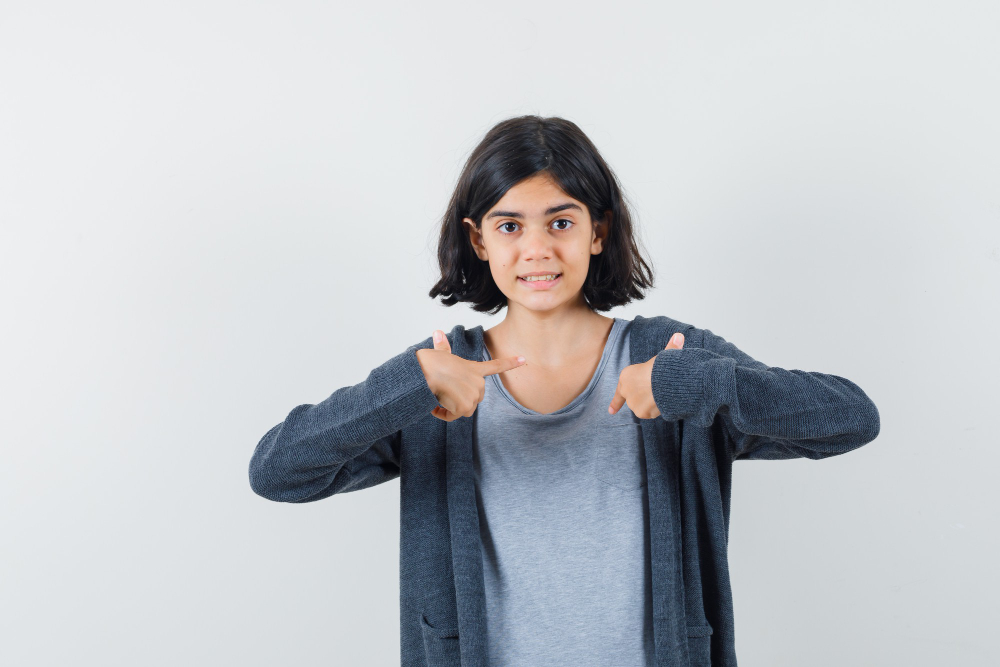
Student self-confidence isn't simply about achieving good marks. It's about trusting one's ability to learn, adapt, and recover from mistakes. When student self-esteem is nurtured alongside academic achievement, children become more willing to take risks, ask questions, and push toward their actual potential rather than stopping safely short of it.
The confidence gap in students doesn't develop overnight. It tends to build gradually, shaped by a combination of psychological patterns, educational environments, and the particular pressures of growing up in 2026.
Fear of mistakes has become stronger than the desire to learn.
Picture a child who won't attempt an answer unless they're completely certain it's correct. They're not disengaged. They're afraid of being wrong in front of others. As exam pressure intensifies, many students begin to associate mistakes with embarrassment rather than learning. This feeds perfectionism in students. A pattern where avoiding failure feels far safer than risking it. The result is a child who knows more than they ever show.
Success gets measured by marks instead of progress.
When the first question after an exam is "how many marks did you get?", children learn quickly to tie their sense of worth to a number. Over time, academic pressure can squeeze out curiosity, reducing student motivation to a simple calculation: learn for grades, not for genuine understanding. Confidence and academic performance become tangled together in ways that don't serve either.
Praise for results can sometimes backfire.
Telling a child "you're so smart" feels encouraging. But it can quietly make them afraid of situations where they might not seem smart, where they might struggle, fail publicly, or need help. Recognising effort instead by saying "you worked really hard on this" builds something more durable. It develops a growth mindset for students, reinforces building resilience, and teaches children that capability comes from learning, not from performing effortless success.
Twenty years ago, a child's biggest social comparison was usually the smartest student in class or the best player on the school team. Today, before they've even left for school in the morning, they've already scrolled past dozens of people who appear smarter, more talented, more creative, or more accomplished.

This shift is quietly widening the confidence gap in students in ways that are difficult to address because they're largely invisible.
Social media has made comparison a constant.
Platforms like Instagram, YouTube, and Snapchat surface exceptional achievement relentlessly. Algorithms favour content that showcases extraordinary talent, flawless appearance, and seemingly effortless success. Children absorb a daily feed of academic achievement posts, viral skills, and influencer lifestyles that bear almost no relationship to ordinary experience. Over time, the relationship between social media and self-esteem becomes genuinely corrosive, comparison among students becomes habitual, and low self-esteem in students follows almost inevitably.
Extraordinary has become ordinary.
Millennial parents might remember hearing about exceptional young people occasionally through a newspaper story or a television segment. Today's children encounter them daily. A fourteen-year-old launching a startup. A teenage influencer with millions of followers. A child prodigy on an international stage. "Study with me" videos featuring immaculate notes and six-hour focus sessions. When this kind of content fills a child's daily feed, it quietly distorts their sense of what's normal, and raises the pressure on students to achieve more, faster, with less room for the ordinary messiness of actually growing up.
The pressure to excel at everything simultaneously.
Academic success is no longer considered enough on its own. Many children now feel an unspoken expectation to achieve top grades, play competitive sport, learn coding, participate in Olympiads, build impressive portfolios, volunteer, and communicate confidently – all at once. This relentless accumulation of demands contributes directly to student burnout and makes confidence and academic performance feel like a zero-sum competition rather than complementary goals.
This isn't a challenge that belongs only to children. Many parents find themselves making exactly the same comparisons in the form of careers on LinkedIn, milestones on Instagram, other people's homes, other people's holidays, other people's seemingly effortless lives.

If adults with decades of self-knowledge struggle to keep social comparison in perspective, it's not difficult to imagine how overwhelming it is for a twelve-year-old whose sense of identity is still taking shape. Parenting in the digital age isn't just about limiting screen time. It's about helping children understand, at an age when everything feels intensely personal, that social media reflects carefully curated moments, and not everyday reality. Raising confident children in this environment is one of the genuinely hard problems of digital parenting today.
Confidence isn't built by being repeatedly told "you can do it." It builds through doing difficult things such as speaking in front of an audience, leading a team through disagreement, solving a problem without a template, collaborating with people you don't already know, or turning an idea into something real.
Every meaningful experience deposits something into a child's internal bank of self-belief: I've done something hard before. I can do it again.

At BeWise, the approach to future-ready education reflects this understanding. BeWise skill programmes are designed to help students develop confidence through practical, real-world experiences rather than academic repetition alone. This includes life skills courses, public speaking and communication, leadership programs, entrepreneurship for students, financial literacy for students, emotional intelligence, experiential learning, teamwork, and future skills development for careers that are still taking shape.
These confidence-building programs encourage students to step outside their comfort zones, discover capabilities they didn't know they had, and build the kind of self-belief that doesn't disappear when the exam is over. Because confidence isn't something children are born with or without. It's something they build one experience at a time.
The child who knew the answer but never raised their hand deserves more than good grades.
They deserve the confidence to be heard.
Knowledge opens doors. Confidence gives children the courage to walk through them — and to keep walking when the path gets uncertain. In a world that keeps changing faster than any curriculum can track, that combination may matter more than anything else education can offer.
1. What is the confidence gap in students?
The confidence gap in students is the distance between a child's actual abilities and what they believe they're capable of. A student may perform well academically but consistently hesitate to answer questions, take on new challenges, or express ideas. This happens not because they lack the knowledge, but because they don't yet trust themselves enough to use it. Building student confidence and academic confidence together is essential for helping children reach their full potential inside and outside the classroom.
2. Why do bright students doubt their abilities?
Fear of failure, perfectionism, mounting academic pressure, and constant comparison among students are the most common contributors. Over time, these factors reduce self-confidence in students and cause children to avoid opportunities they're entirely capable of handling.
3. How does social media affect student confidence?
The relationship between social media and self-esteem has become one of the more significant challenges in adolescent development. Daily exposure to curated achievement, extraordinary talent, and algorithmically amplified success creates unrealistic benchmarks that most children will inevitably fall short of. Encouraging healthy digital well-being for students and helping them understand what social media actually represents versus what it appears to, supports a more grounded and realistic sense of self-worth.
4. Can schools help improve student confidence?
Significantly. Schools that offer structured confidence-building programs beyond academic content and offer genuine opportunities to fail and recover in a safe environment, consistently produce students with stronger resilience, better communication, and the belief that their abilities are real and worth acting on.

School
Pre School
Tuitions
After School Activity
Other Info
After School Activity
Community Support
Corporate Info
Contact Us


© Copyright 2026 BeWise & Wisdom Tech Solutions. All Rights Reserved. Bewise is a platform developed and managed by Wisdom Tech Solutions Pvt Ltd.