
Bengaluru
Bengaluru
Search Here
AUTHOR: Bewise-Admin

When parents send their children to school, they think about subjects like mathematics, science, languages, and history. The things that appear on timetables and report cards.
But many of the lessons that children most need are the ones that actually shape how they move through the world. And those lessons don't appear in any textbooks. They're not on the syllabus. They won't be tested. And yet they stay with a child long after the school bell rings for the last time.
If a child forgets a quadratic formula, they can relearn it in an afternoon. But if a child spends years being compared to others and quietly concludes that they aren't quite good enough, recovering from that takes considerably longer.
That's the hidden curriculum in education. The silent, ongoing lessons shaping how children think, what they value, how they treat others, and how they see themselves. It lives not in chapters or assignments but in the texture of everyday school life: a teacher's response to a wrong answer, a group project that falls apart and has to be rebuilt, a playground conflict that gets resolved or doesn't. Every one of these moments is teaching something whether anyone intended it to or not.
These experiences shape confidence, relationships, and decision-making long after formal education ends.
As school education in India continues to evolve, the importance of education beyond academics has become increasingly hard to ignore. NEP 2020 recognizes this, calling for learning that builds not just knowledge but social and emotional capability alongside it. In practice, how well schools deliver on this varies enormously. But for most children, the hidden curriculum remains one of the most powerful forces in their development.
The hidden curriculum is the daily, unwritten syllabus that no teacher puts on the board, and no student is formally assessed on. It's absorbed through experience, through how setbacks are handled, how disagreements are navigated, how persistence is modelled or discouraged, how belonging is extended or withheld.
The distinction between the formal curriculum vs hidden curriculum is straightforward:
The formal curriculum covers prescribed subjects such as mathematics, science, languages, and social studies. These are regularly assessed through homework, assignments, and examinations, and help in building the academic knowledge.
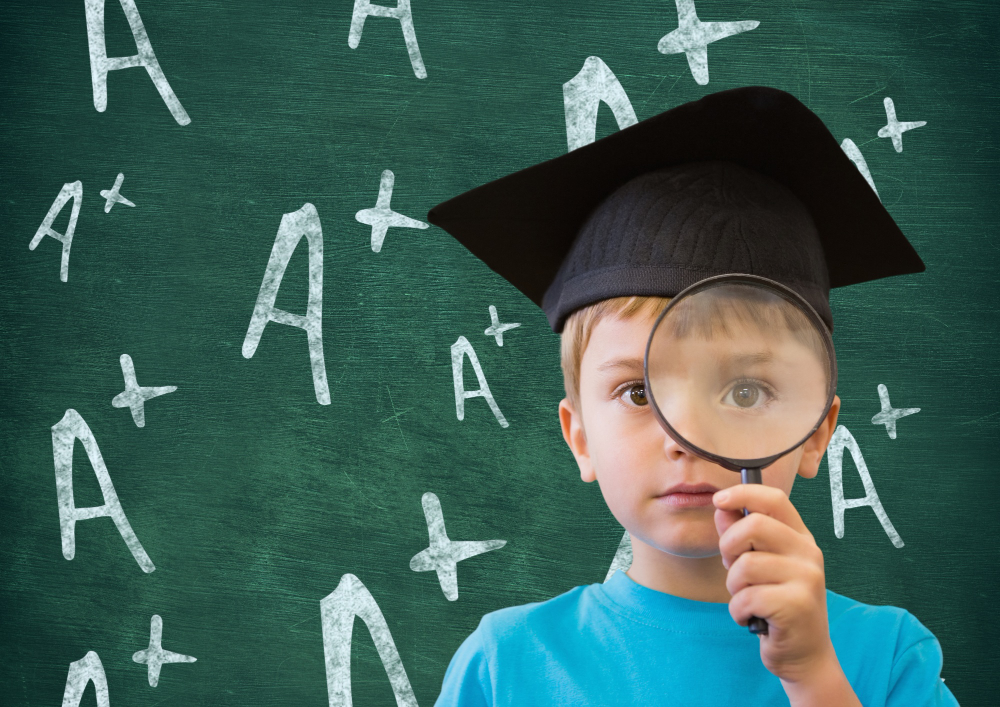
The hidden curriculum, on the other hand, covers values, attitudes, social behaviors, habits, mindset, interpersonal skills, and character development. It lives in everyday experiences and interactions rather than any official document.
On an ordinary school day, a child might learn to wait for their turn without being told why patience matters. They might lose a competition and discover, slowly, that the world doesn't end. They might speak up when confused and find out whether asking questions is welcomed or quietly discouraged. They might work alongside classmates and realize that two people thinking together often get further than one person thinking alone.
None of this appears on a report card. But, most of it lasts a lifetime.
Children absorb thousands of subtle lessons daily often without realizing it's happening. These invisible lessons shape how they respond to difficulty, build relationships, approach problems, and understand what success means. Here are the seven that matter most.
Daily interactions with teachers and peers shape student confidence and self-esteem in children more profoundly than grades ever do. When a teacher takes a child's question seriously or responds to a mistake with curiosity rather than correction, something shifts internally: I belong here. My thinking matters.
The opposite is equally true. Persistent comparison, being overlooked, or having mistakes treated as failures rather than information can plant seeds of self-doubt that are genuinely difficult to uproot later.
This is why confidence building in students isn't primarily about praise. It's about creating environments where mistakes are treated as part of learning, where effort and curiosity are valued alongside results, and where children develop the internal belief that their abilities are real and worth acting on.
Every group discussion, paired activity, team project, and shared lunch table contributes to developing communication skills for children. Students learn to listen without interrupting, express disagreement without hostility, negotiate competing ideas, and resolve conflict without withdrawing entirely.
Through collaboration in school, they also discover something that no individual assignment can teach. They learn that meaningful outcomes usually require shared effort. The teamwork skills built through these everyday interactions are precisely what every workplace, relationship, and community will ask of them later.
School is, among other things, an extended crash course in emotions. Friendships that fracture and reform. Disappointments that have to be absorbed without falling apart. Small moments of courage such as speaking up, saying sorry, trying again after failure.
These experiences rarely appear in the syllabus. But they form the foundation of emotional intelligence in children and social emotional learning in ways that matter enormously. Over time, they build resilience in students and teach the capacity to regulate feelings, understand others' perspectives, and respond thoughtfully rather than reactively to difficulty.
Leadership doesn't begin with managing a team in adulthood. It begins much earlier, in moments that look almost too small to notice. Serving as class monitor. Organizing an event. Helping a classmate who's stuck. Leading a group through a project that isn't going well.
These opportunities develop leadership skills for students gradually and authentically. They also build a sense of responsibility in school by teaching children what it means to be accountable, to take initiative, and to understand how your behavior affects the people around you. Student leadership at this scale is where the habit of leading with integrity rather than authority first takes hold.
Perhaps the most consequential thing a classroom shapes is a child's relationship with learning itself.
A classroom that celebrates effort, welcomes curiosity, and treats mistakes as useful data produces children who find the process of learning genuinely interesting. A classroom organized around competition and correct answers produces children who learn to perform rather than explore.
This is where the early seeds of a growth mindset are either planted or not. When children feel safe enough to be curious, to ask questions they're not sure about, to try things they might fail at – that's when they begin to enjoy the journey rather than fixating on the result.
Technology is now woven into school education in India in ways that weren't true even five years ago. Smart classrooms, AI-powered learning tools, and digital platforms are giving students access to a connected world and, simultaneously, teaching them how to navigate it.
Alongside academic content, children are absorbing lessons about how to communicate respectfully online, how to protect their privacy, and how to distinguish credible information from misinformation. Digital literacy for students has become an essential life skill, not a supplementary one.
NEP 2020 encourages greater technology integration. But the reality is uneven across schools and regions. This makes media literacy and strong digital habits more important, not less. Children need these capabilities regardless of what tools their specific school happens to have available.
Life rarely presents problems with a single correct answer and unlimited time to find it. Beyond formal examinations, children develop critical thinking skills through projects, competitions, extracurricular activities, and the genuine unpredictability of collaborative work.
These experiences build problem solving for students alongside the adaptability skills needed to function in a world that keeps changing. India's push toward competency-based education reflects this priority. Less of memorization and more of application, less knowing the answer, more developing the judgment to find one – that's the way forward.
The careers children will enter, the technologies they'll navigate, and the challenges they'll face are changing faster than any curriculum can anticipate. Future-ready education requires more than academic excellence. It requires the development of the whole person.
NEP 2020 places meaningful emphasis on experiential learning, multidisciplinary education, and competency-based approaches that help students apply knowledge rather than simply store it. But policy on paper is only as effective as what happens in classrooms, in teacher-student relationships, and in the unplanned moments that fill a school day.
.jpg)
Every interaction, every classroom culture, every school's approach to belonging and challenge is shaping the 21st century skills children will carry into adult life: communication, collaboration, resilience, creativity, and critical thinking. These aren't supplementary to academic achievement. They're what makes academic achievement actually useful.
Holistic child development means nurturing the qualities that help children succeed not just in examinations but in relationships, careers, and the ordinary complexity of everyday life.
Alongside academic results, it's worth asking a different set of questions:
Is my child becoming more curious and more willing to ask questions they don't already know the answers to? Are they developing the resilience to recover from setbacks without being defined by them? Are they learning to be kind and genuinely empathetic? Are they growing in confidence to express ideas and attempt things they might not succeed at immediately? Are they becoming more capable of making independent decisions? Are they adapting well to change rather than being destabilized by it?
These qualities are the real indicators of child development and long-term readiness. Academic achievement matters. But curiosity, resilience, empathy, and confidence building are what put children in a strong position for whatever comes next including things no one has predicted yet.
Even the best-intentioned schools are inconsistent about life skills. Some do it well. Others leave it to chance and to whichever teacher happens to prioritize it, or to the culture of a particular year group. The result is that many children move through school without ever having the hidden curriculum made explicit or intentional.
BeWise complements classroom education by strengthening precisely these capabilities. Not by replacing academics, but by ensuring the skills that help children apply their knowledge with confidence aren't left to luck.
Through thoughtfully designed life skills programs for students, BeWise focuses on communication and public speaking, leadership development, critical thinking and creative problem solving, confidence building, collaboration and emotional intelligence, financial literacy, and entrepreneurship and digital skills. These aren't additions to education. They're the foundation that makes everything else work better.
Children who develop these capabilities don't just perform well on assessments. They become thoughtful, adaptable, and genuinely ready for the world including the parts of it that no exam will ever prepare them for.
The real purpose of education has never been a choice between marks and life skills. It's always been about bringing both together.
When children are given space to grow fully, not just to perform well on tests, but to develop as people, they're being given something that lasts far beyond any result. Whatever path they eventually take, that foundation follows them.
1. What is the hidden curriculum in education?
The hidden curriculum in education refers to the unwritten lessons children absorb through everyday school experience rather than formal instruction. The hidden curriculum meaning encompasses values, social behaviors, communication, teamwork, resilience, and emotional development - all of which shape holistic child development in ways that academic content alone cannot.
2. How does the hidden curriculum affect student confidence?
The hidden curriculum shapes student confidence through the cumulative effect of everyday interactions along with teacher feedback, classroom participation, peer relationships, and how mistakes are treated. Consistently positive experiences support confidence building for students, while environments built around comparison and performance can quietly erode self-belief over time.
3. What life skills do children learn in school beyond academics?
Life skills in school include communication, collaboration, leadership, resilience, critical thinking, emotional intelligence, and adaptability. These are developed through social emotional learning and everyday school experience, and they prepare children for higher education, careers, and the demands of adult life more reliably than academic content alone.
4. Does NEP 2020 encourage learning beyond academics?
Yes. NEP 2020 promotes holistic education through experiential learning, multidisciplinary approaches, skill development, and competency-based education. Its goal is to develop practical capability, critical thinking, and creativity alongside academic knowledge, recognizing that future readiness requires both.
5. How can parents support learning beyond academics at home?
By encouraging curiosity, independent thinking, open communication, and everyday problem-solving. Strong parenting and education partnerships where home reinforces the dispositions school is trying to build help children develop confidence, resilience, empathy, and the habit of lifelong learning that no classroom can fully provide on its own.

School
Pre School
Tuitions
After School Activity
Other Info
After School Activity
Community Support
Corporate Info
Contact Us


© Copyright 2026 BeWise & Wisdom Tech Solutions. All Rights Reserved. Bewise is a platform developed and managed by Wisdom Tech Solutions Pvt Ltd.